<p class="has-ast-global-color-8-color has-text-color has-link-color wp-elements-1 wp-block-paragraph"><strong>Project Identity:</strong><em> Shinar of Clark</em><br><strong>Author:</strong><em> Yi Zeng</em><br><strong>Framework:</strong><em> Causal Auditing for Offshore Wind Sub-health Diagnosis</em><br>Manuscript PDF:<em> </em><a href="https://www.researchgate.net/publication/405463239_A_Causal_Auditing_Paradigm_for_Sub-health_Diagnosis_of_Offshore_Wind_Assets_via_Multi-terminal_Harmonic_Fingerprinting" target="_blank" rel="noreferrer noopener">Read the Full Paper Here</a>(ResearchGate)<br><strong>DOI:</strong><em> </em><a href="https://doi.org/10.5281/zenodo.20149720" target="_blank" rel="noreferrer noopener">https://doi.org/10.5281/zenodo.20149720</a><br><em>github:</em><a href="https://github.com/Shinar-of-Clark/Clark-Paradigm-Initiative" target="_blank" rel="noreferrer noopener">https://github.com/Shinar-of-Clark/Clark-Paradigm-Initiative</a><br><em>Email:
[email protected]</em></p>
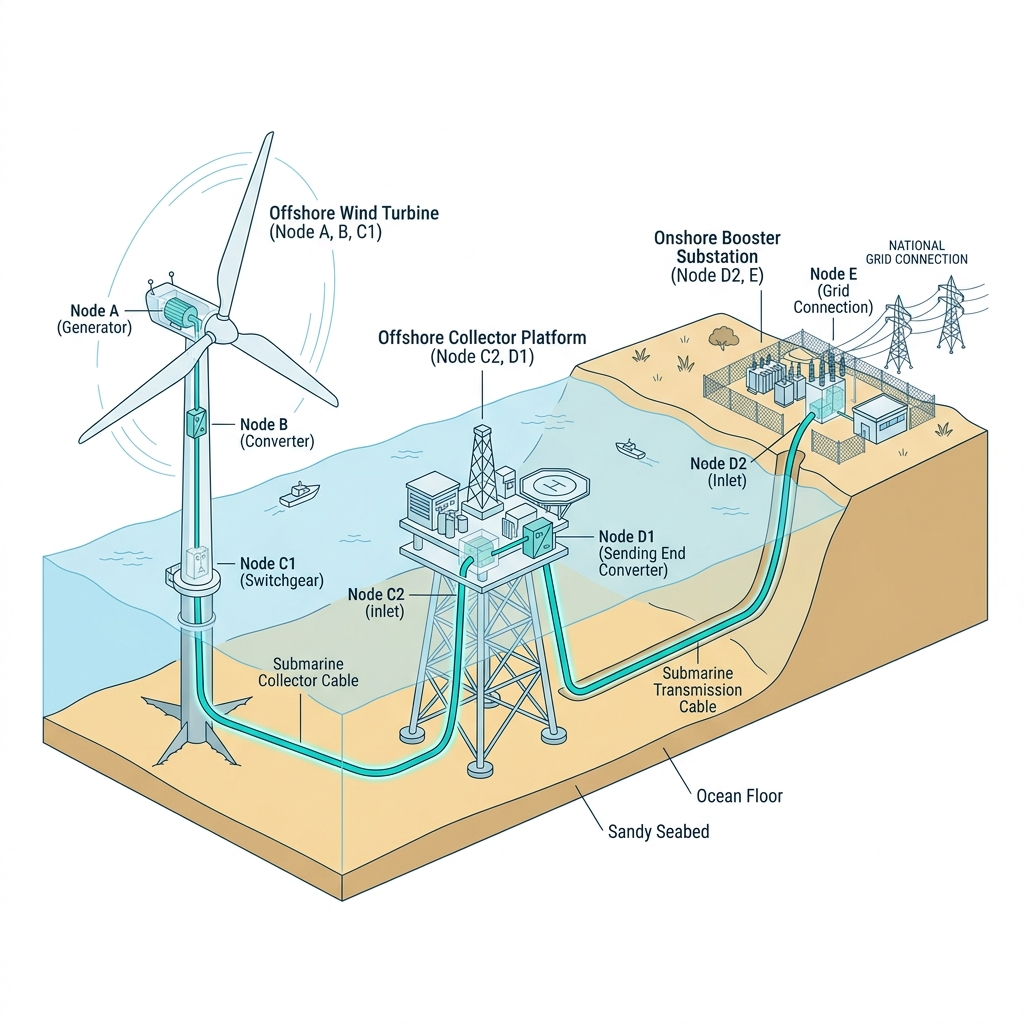
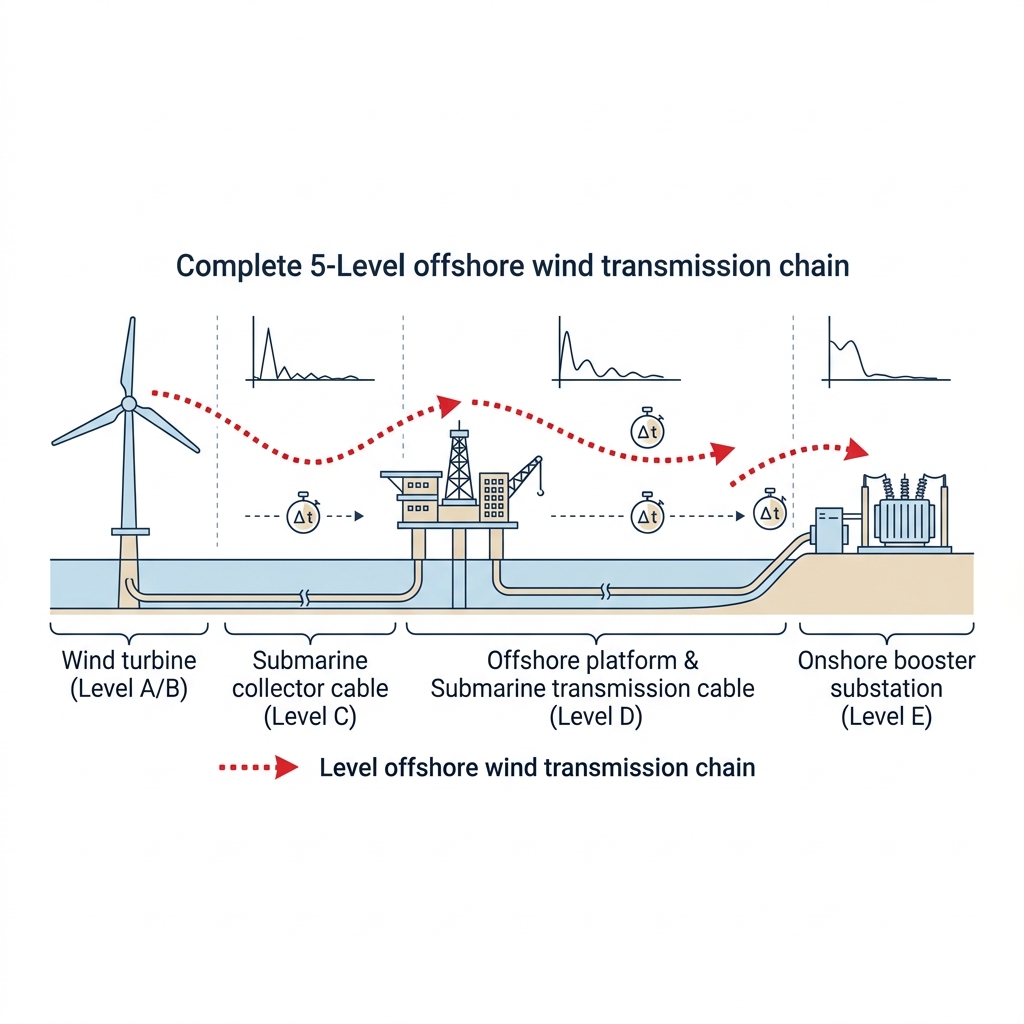
<p class="has-ast-global-color-8-color has-text-color has-link-color wp-elements-2 wp-block-paragraph">In highly power-electronic systems such as offshore wind farms, spectral turbulence inherently materializes within marine power-electronic clusters, primarily driven by the intricate capacitive coupling of subsea transmission topologies. The absence of a robust logical mapping from volatile operations to deterministic health states intrinsically limits traditional reactive maintenance paradigms. While heuristic forecasting models offer theoretical utility, the extreme aerodynamic stochasticity of deep-sea environments systematically fractures standard physical causal chains, thereby obscuring the precursors of latent faults such as dielectric insulation degradation. This paper proposes a novel ”Electromagnetic Ledger” framework under the Clark Paradigm, establishing a deterministic causal link between the generator (Node A), converter (Node B), tower-base switchgear (Node C1), and the remote collector entrance (Node C2) by extracting harmonic fingerprints (1st–20th orders). This paradigm achieves a structural transition from ”black-box stochastic prediction” to ”deterministic causal auditing” by establishing individualized digital ledgers for each turbine and its dedicated collector link. This cycle-based strategy, centered on a single machine as the minimum auditing unit, not only isolates early insulation drifts but also maximizes the residual economic value extraction of assets. Experimental results elucidate that the proposed Clark Paradigm exhibits superior adaptive robustness compared to conventional LSTM models under extreme transients, providing high-fidelity early-warning signals for asset sub-health.</p>
<div data-wp-interactive="core/file" class="wp-block-file"><object data-wp-bind--hidden="!state.hasPdfPreview" hidden class="wp-block-file__embed" data="https://shinarofclark.com/wp-content/uploads/2026/05/A-Causal-Auditing-Paradigm-for-Sub-health-Diagnosis-of-Offshore-Wind-Assets-via-Multi-terminal-Harmonic-Fingerprinting-1.pdf" type="application/pdf" style="width:100%;height:800px" aria-label="嵌入 A Causal Auditing Paradigm for Sub-health Diagnosis of Offshore Wind Assets via Multi-terminal Harmonic Fingerprinting"></object><a id="wp-block-file--media-8154c8ae-d624-4011-abbf-6d08f57c0384" href="https://shinarofclark.com/wp-content/uploads/2026/05/A-Causal-Auditing-Paradigm-for-Sub-health-Diagnosis-of-Offshore-Wind-Assets-via-Multi-terminal-Harmonic-Fingerprinting-1.pdf">A Causal Auditing Paradigm for Sub-health Diagnosis of Offshore Wind Assets via Multi-terminal Harmonic Fingerprinting</a><a href="https://shinarofclark.com/wp-content/uploads/2026/05/A-Causal-Auditing-Paradigm-for-Sub-health-Diagnosis-of-Offshore-Wind-Assets-via-Multi-terminal-Harmonic-Fingerprinting-1.pdf" class="wp-block-file__button wp-element-button" download aria-describedby="wp-block-file--media-8154c8ae-d624-4011-abbf-6d08f57c0384">Download</a></div>
<p class="wp-block-paragraph"></p>
Project Identity: Shinar of Clark
Author: Yi Zeng
Framework: Causal Auditing for Offshore Wind Sub-health Diagnosis
Manuscript PDF: Read the Full Paper Here(ResearchGate)
DOI: https://doi.org/10.5281/zenodo.20149720
github:https://github.com/Shinar-of-Clark/Clark-Paradigm-Initiative
Email:[email protected]
In highly power-electronic systems such as offshore wind farms, spectral turbulence inherently materializes within marine power-electronic clusters, primarily driven by the intricate capacitive coupling of subsea transmission topologies. The absence of a robust logical mapping from volatile operations to deterministic health states intrinsically limits traditional reactive maintenance paradigms. While heuristic forecasting models offer theoretical utility, the extreme aerodynamic stochasticity of deep-sea environments systematically fractures standard physical causal chains, thereby obscuring the precursors of latent faults such as dielectric insulation degradation. This paper proposes a novel ”Electromagnetic Ledger” framework under the Clark Paradigm, establishing a deterministic causal link between the generator (Node A), converter (Node B), tower-base switchgear (Node C1), and the remote collector entrance (Node C2) by extracting harmonic fingerprints (1st–20th orders). This paradigm achieves a structural transition from ”black-box stochastic prediction” to ”deterministic causal auditing” by establishing individualized digital ledgers for each turbine and its dedicated collector link. This cycle-based strategy, centered on a single machine as the minimum auditing unit, not only isolates early insulation drifts but also maximizes the residual economic value extraction of assets. Experimental results elucidate that the proposed Clark Paradigm exhibits superior adaptive robustness compared to conventional LSTM models under extreme transients, providing high-fidelity early-warning signals for asset sub-health.