
In 19th-century Europe, there was a “peasant’s son” named Johann.
His lifelong dream was to become a respected teacher. To afford an education and prepare for the teacher certification exams, he entered a monastery to become a monk. However, fate seemed to play cruel jokes on him: he failed the teacher certification exams twice. With no formal teaching credentials, Johann had no choice but to return to the monastery’s garden.
Yet, who could have imagined that this very dropout, who couldn’t even obtain a teaching license, would spend eight years quietly “farming” in the backyard of the monastery and ultimately open the door to modern life sciences?
1. A Poor Youth’s “Academic Sanctuary” and Family Tragedy
In 1822, Johann was born into a struggling peasant family. His father, Anton, was a hardworking orchardist who personally taught him the art of fruit tree grafting. But when Johann was 16, a tragic accident occurred: Anton was crushed and severely disabled by a rolling log while performing compulsory labor. Overnight, the family fell into extreme poverty, leaving Johann to struggle for an education while constantly battling illness and hunger.
To obtain a free education and escape the “constant anxiety about a livelihood,” Johann followed the recommendation of his physics teacher, Friedrich Franz. At the age of 21, he made the decision to join the Augustinian St. Thomas’s Abbey in Brno, officially beginning his monastic life.
2. A Repeatedly Failed Quest for Certification and a Vienna Adventure
Before entering the monastery, Johann studied at a philosophical school where the Department of Natural History and Agriculture was led by Johann Karl Nestler. Nestler’s research focused on the hereditary traits of plants and animals, particularly sheep, which planted the first seeds of heredity in Johann’s mind.
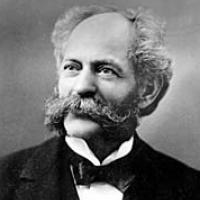
Caption: Johann Karl Nestler, whose early research on plant and sheep breeding planted the scientific seeds of heredity in the young Johann’s mind.
After entering the monastery, Johann began working as a substitute teacher at a secondary school. Because of his deep passion for teaching, he took the teacher certification exam to secure a permanent tenure:
- First Attempt (1850): Being largely self-taught, Johann became extremely nervous during the oral portion and failed. However, the examiners recognized his unique scientific talent and recommended that he receive systematic education at the University of Vienna.
Though he failed the exam, he was fortunate to have an extremely open-minded and visionary mentor in the monastery—Abbot Cyrill Napp.
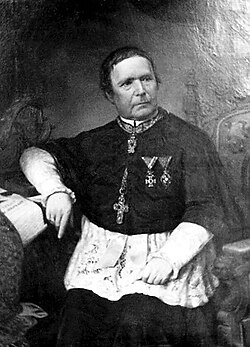
Caption: The open-minded Abbot Cyrill Napp, whose selfless financial backing and advanced scientific vision served as the strongest support on Johann’s scientific journey.
Abbot Napp was eager to improve the quality of sheep’s wool through scientific methods. In 1851, funded by Napp, Johann went to the University of Vienna for systematic education. In Vienna, he met the physicist Christian Doppler and the mathematician Andreas von Ettingshausen, laying the foundation for his interdisciplinary thinking:
- Doppler’s “Physical Precision Ruler”: As Doppler’s demonstrator (assistant) at the Physical Institute, Johann underwent rigorous training in quantitative experimental physics. This taught him to design experiments using the physical “control of variables” method, pioneering the quantitative study of biology.
- Ettingshausen’s “Mathematical Golden Key”: This combinatorial mathematician introduced Johann to the concepts of probability and combinatorics, directly inspiring him to treat the random combination of genes as probabilistic events and use the binomial expansion:
(A + a)2 = A2 + 2Aa + a2
to derive and predict the distribution of traits in hybrid offspring.
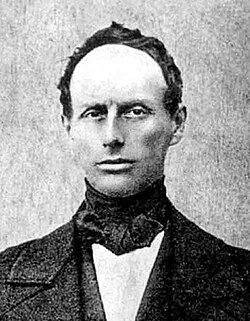
Caption: The physicist Christian Doppler, who trained the young Johann in rigorous quantitative physical experimentation.
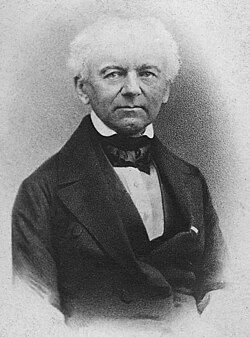
Caption: The mathematician Andreas von Ettingshausen, who taught Johann combinatorics, providing the mathematical key to deriving the laws of inheritance.
In 1853, Johann returned to the monastery to teach, focusing primarily on physics. In 1854, he met the naturalist Aleksander Zawadzki, who encouraged him to conduct scientific research in Brno.
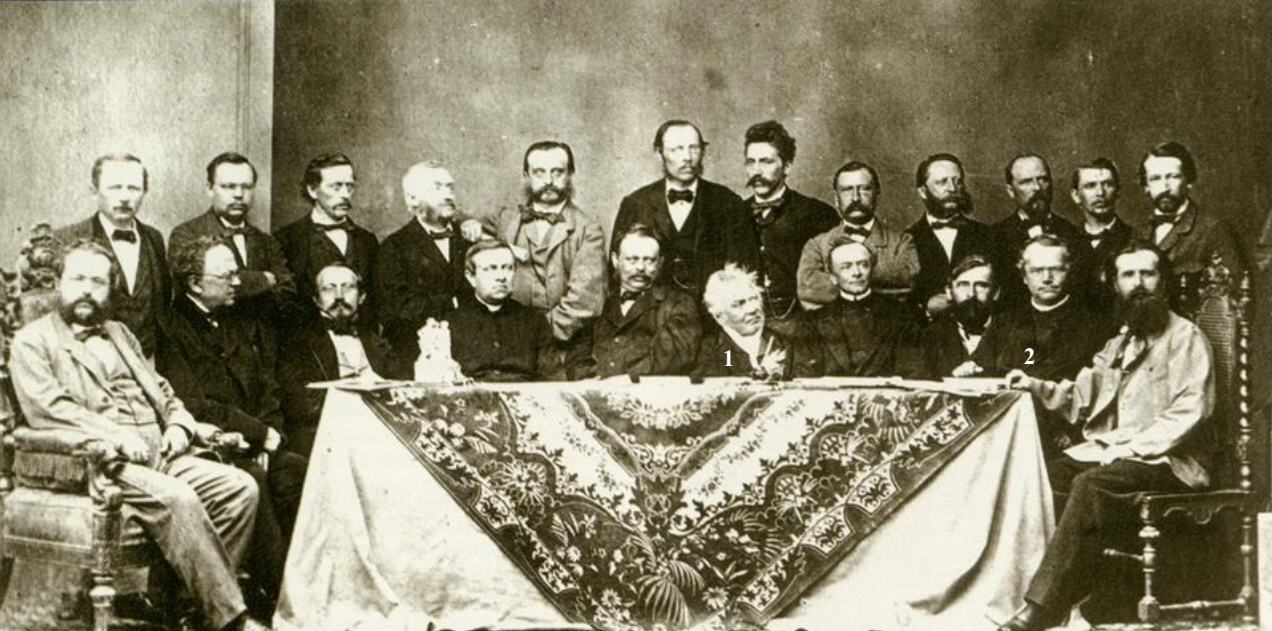
Caption: Faculty of Brno Technical College in 1864, seated sixth from left is Alexander Zawadzki and ninth is Gregor Mendel.
Meanwhile, he prepared for his second teacher certification exam while setting up his experiments. However, fate played another trick on him:
- Second Attempt (1856): He took the exam again, but still failed in the oral presentation portion.
3. Interdisciplinary Thinking: Playing with Math in the Veggie Garden
The total failure of the two exams permanently shut the door to a formal teaching career, allowing Johann to focus entirely on the monastery’s garden.
In the restored greenhouse (Figure 6) and garden behind the monastery, facing tens of thousands of hybrid pea plants, Johann brilliantly applied the binomial expansion to describe the transmission of genetic traits:
(A + a)2 = A2 + 2Aa + a2
Due to the existence of complete dominance, the physical expressions (phenotypes) of the homozygous dominant (A2) and heterozygous (Aa) plants are identical. In mathematical terms, this distribution manifests macroscopically as the classic 3:1 ratio of dominant to recessive traits.
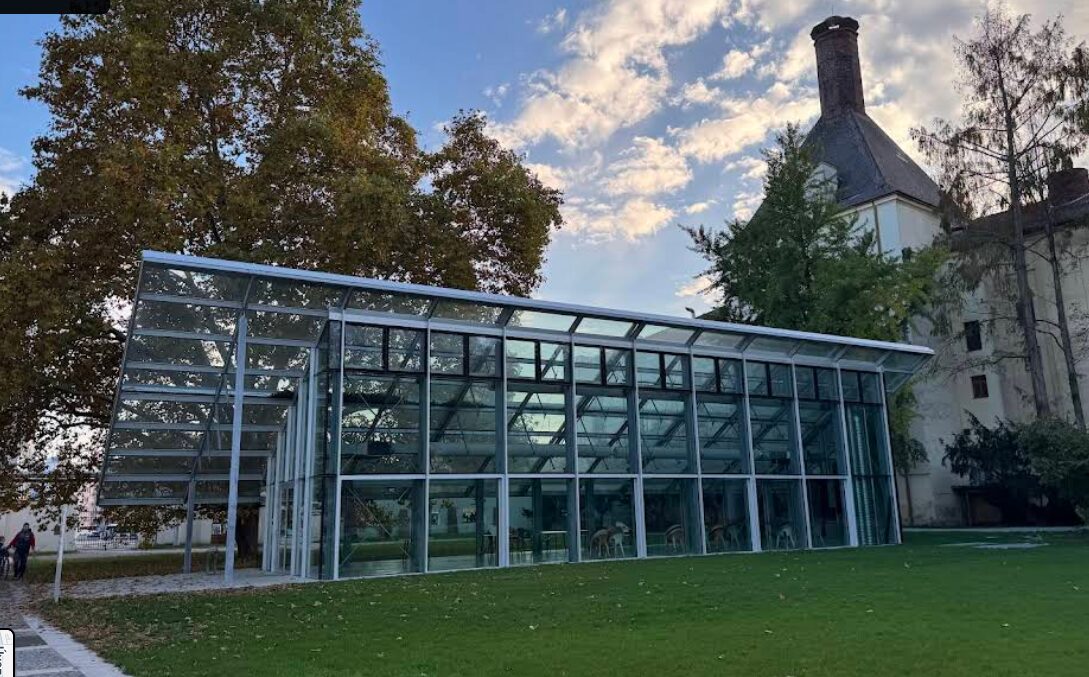
Caption: The reconstructed greenhouse at St. Thomas’s Abbey in Brno, standing on the exact site where the legend of genetics was born.
4. Unveiling the Mystery: The Forgotten and Burned Pioneer
In 1865, he compiled the results of his eight-year pea experiments and published his landmark paper.
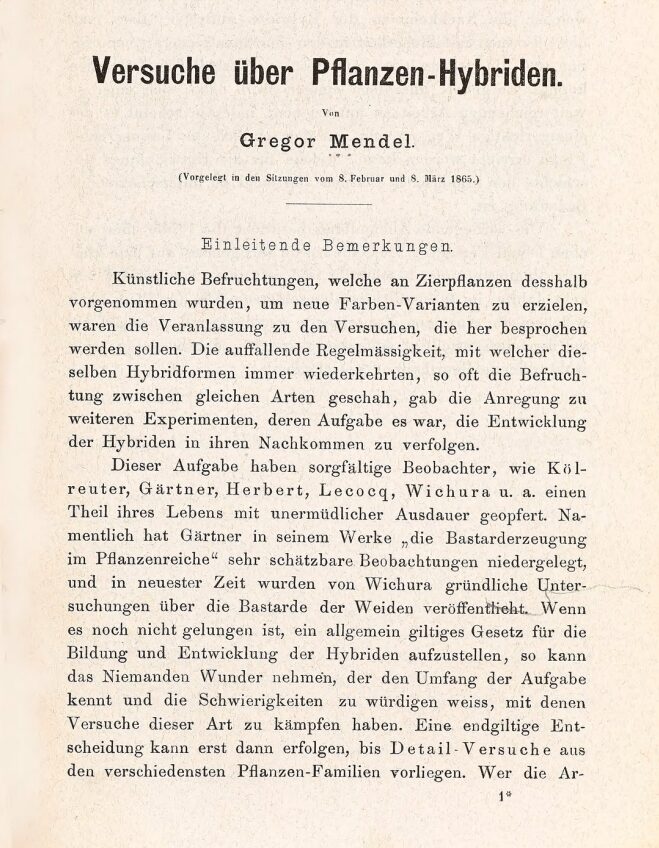
Caption: The cover of the original 1865 paper, which laid the foundation for modern genetics.
This paper was not understood at the time. Seeking academic recognition, Johann hopefully sent his paper to the renowned Swiss-German botanical authority Carl von Nägeli.
However, Nägeli could not comprehend Johann’s advanced mathematical analysis. He condescendingly wrote back, suggesting that Johann repeat his experiments on hawkweed (Hieracium)—a genus Nägeli was studying—to verify his laws.
This turned out to be the greatest “disaster” of Johann’s scientific career. At the time, no one knew that hawkweed possesses a peculiar reproductive mechanism called apomixis (asexual seed formation), where seeds are genetic clones of the mother plant, requiring no fertilization.
To fulfill the suggestion in that letter, Johann embarked on years of near-masochistic hawkweed hybridization experiments. Because hawkweed flowers are extremely tiny, he had to use a magnifying glass and a fine needle to painstakingly emasculate each flower before it opened. This took a massive toll on his eyesight and energy, causing frequent eye strain and severe headaches.
Worse, due to the asexual reproduction of hawkweed, the experimental results failed completely to reproduce the laws observed in peas. Despite the setback, Johann’s physical training kept his intuition sharp. In his letters to Nägeli and his later short report, he made a bold, advanced conjecture: during hybridization, the seed formation and reproductive mechanism of hawkweed might be fundamentally different from those of peas, which explains the inability to replicate the results.
Regrettably, no one at the time paid attention to this dropout substitute teacher’s hypothesis. It was not until decades later (the early 20th century) that botanists finally confirmed the apomixis mechanism of hawkweed—they indeed produce seeds directly from maternal cells without fertilization.
History ultimately proved that Johann’s conjecture was entirely correct! His experimental technique was flawless; the law was not wrong, but the organism’s reproductive mechanism was exceptional. Yet, at the time, this unresolved mystery threw him into a deep abyss of self-doubt. He began to question whether his “pea law” was a universal law of life or merely an un-generalizable “special case.”
Overwhelmed by disappointment and doubt, this great paper was left to gather dust in the corners of libraries.
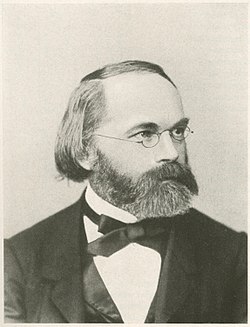
Caption: The botanical authority Carl von Nägeli, who, failing to comprehend Mendel’s mathematical approach, led Johann down the frustrating detour of hawkweed experiments, severely damaging Mendel’s scientific confidence.
Afterward, Johann’s life took another turn:
- 1867: He succeeded Napp as the new Abbot of the monastery.
- 1868 (After becoming Abbot): Heavy administrative duties—particularly a long-running dispute with the government over special taxes on religious institutions—essentially halted his scientific research.
- January 6, 1884: Johann died of chronic nephritis in Brno at the age of 61. The young Czech musician Leoš Janáček played the organ at his funeral.
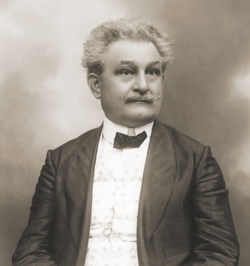
Caption: The young Czech composer Leoš Janáček, who played the organ at Johann’s funeral to bid farewell to the great pioneer with music.
- A Heartbreaking End: To put an end to the tax dispute with the government, the succeeding Abbot ordered the burning of all Johann’s files and research notebooks, sending much of his life’s work up in flames.
It was not until 1900 that three scientists from different countries—the Dutch Hugo de Vries, the German Carl Correns, and the Austrian Erich von Tschermak—independently verified his laws in their own research. Only then did the world realize that the father of modern genetics was the very “Johann” who had twice failed his teacher exams due to test anxiety and spent eight years growing peas in the monastery garden.
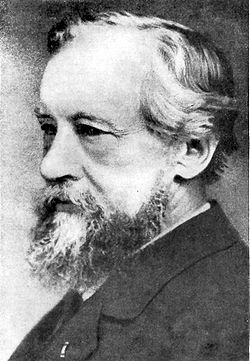
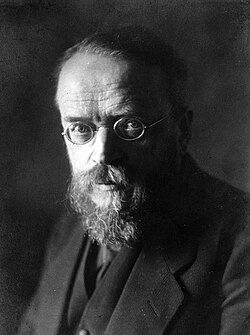
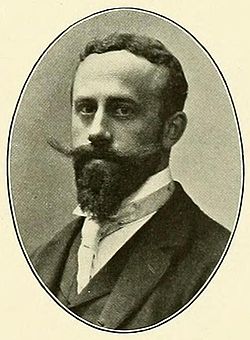
Caption: From left to right: Hugo de Vries, Carl Correns, and Erich von Tschermak. In 1900, they independently confirmed and rediscovered Johann’s laws of inheritance, bringing the long-buried truth to light.
By now, you have probably guessed that the young man named “Johann” was none other than the father of modern genetics—Gregor Johann Mendel.
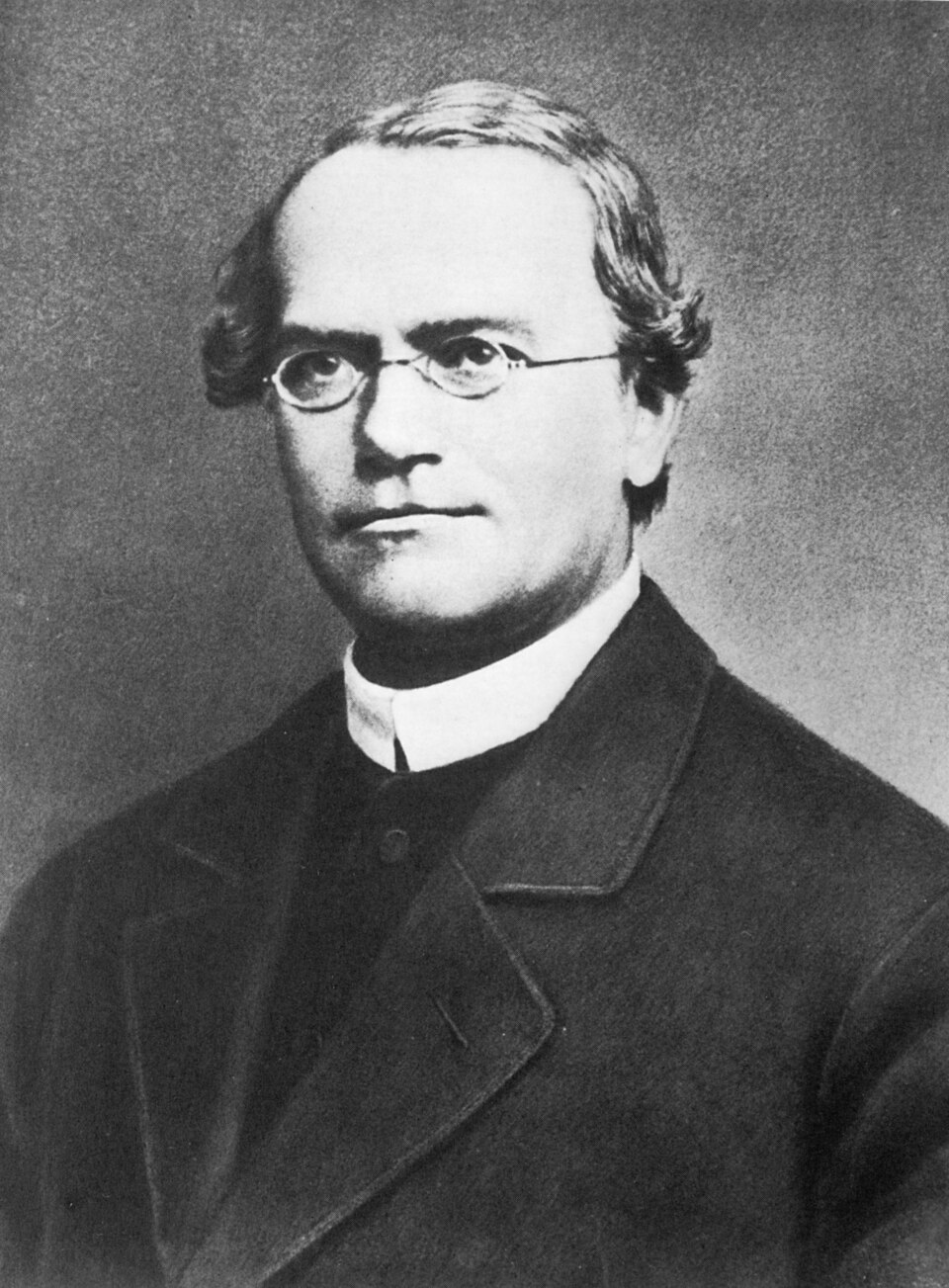
Caption: Portrait of Gregor Johann Mendel. The great founder of genetics, whose perseverance and precision forever changed our understanding of life.
Epilogue: The Great Legacy and Late Coronation
Looking back at Mendel’s life, he was indeed extremely lucky—because he met the most important mentor and guide of his life: Abbot Cyrill Napp.
From the beginning, Abbot Napp held high expectations for this peasant boy who had repeatedly hit walls. It was Napp’s funding that sent him to the University of Vienna, allowing him to learn quantitative experimental methods under the genius Doppler and receive the mathematical keys to genetics from Professor Ettingshausen.
When he returned, Napp specially funded the construction of the greenhouse in the monastery’s backyard. In the 19th century, this was an incredibly expensive glass house, let alone one equipped with subfloor heating. The Abbot withstood pressure from all sides, wishing only that Mendel could focus entirely on his own experiments.
Even after Mendel finished his paper, which was ignored by the scientific establishment as worthless, the Abbot funded its publication and paid for the reprints sent to prominent scientists across Europe.
In addition to Abbot Napp, who provided boundless practical support, there was another “silent mentor” on Mendel’s scientific journey whom he never met in person—the German botanist Carl Friedrich von Gärtner。
Gärtner published his monumental book Versuche und Beobachtungen über die Bastarderzeugung im Pflanzenreich in 1849, which became Mendel’s practical “instruction manual” for his pea experiments. Mendel’s own copy of the book is filled with over 200 of his handwritten annotations. It was Gärtner who described in detail the meticulous method of manually emasculating flower buds (removing the stamens before they open using scissors and forceps) to prevent self-pollination—a technique that became the core operational method of Mendel’s work. In his 1865 paper, Mendel cited Gärtner 17 times, far more than any other scientist. Although Gärtner passed away in 1850 just before Mendel’s research began, his book silently taught Mendel how to work with his own hands to clear the chaos of hybridization.
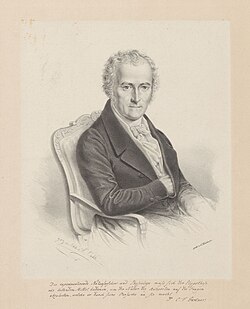
Caption: The botanist Carl Friedrich von Gärtner, who silently taught Mendel the manual technique of emasculation through his writings and was the most cited researcher in Mendel’s 1865 paper.
After the Abbot’s passing, Mendel was elected Abbot by an overwhelming majority of his peers, carrying forward Napp’s legacy. Yet, it is deeply moving and tragic to note that although Napp spent his life nurturing Mendel, he never lived to see Mendel receive even a shred of worldly recognition for his scientific breakthrough.
And this, too, became the turning point of Mendel’s fate.
Once he became Abbot, the heavy administrative duties and the endless tax disputes with the government took away his time in the garden, permanently keeping him away from his beloved research until his death.
Mendel never received the respect of any biology authorities during his lifetime. When he passed away, his funeral was attended not by academic giants, but by local citizens, officials, and the promising young students he had selflessly supported—such as the young Leoš Janáček. In his final years, Mendel passed on the warmth and generosity he had received from Abbot Napp, supporting the next generation of youth.
Truth may be delayed, but it will never be denied.
Thirty-five years later, in 1900, three scientists from different countries—Hugo de Vries, Carl Correns, and Erich von Tschermak—independently discovered the two fundamental laws of biology.
Just as they were preparing to write their names into the annals of science and claim their place in history, they were shocked to find that the scientific peak they had scaled after so much effort was already carved with a name from 35 years ago, alongside a simple remark:
“I have already arrived. – Mendel, 1865.”
Looking back at all this, Mendel was indeed extremely lucky.
He met Abbot Napp, who trusted and supported him from beginning to end; Doppler, who trained him in the rigorous thinking of experimental physics; Ettingshausen, who taught him the principles of combinatorics; and Zawadzki, who encouraged him to carry out his research in Brno. He met one patron and mentor after another. God opened window after window of truth for him—even during his university years in Vienna, the mathematical binomial expansion of inheritance laws and the 1:2:1 distribution ratio (from the binomial expansion (A + a)2 = A2 + 2Aa + a2 of combinatorics) had already been placed directly into his hands by Ettingshausen.
When the number and dimensions of the windows God opened for him so physically surpassed everyone else of his era, that epoch-making insight became inevitable. As a result, Mendel could only stand alone at the peak of science, holding a truth that was decades ahead of his time, quietly waiting for the young scientists 35 years later to slowly arrive.
Although Mendel did not live to witness himself winning supreme glory in the scientific community, his work at the monastery was exceptionally outstanding. From being overwhelmingly elected as Abbot by his peers in the beginning, to his final departure when the church was packed with local citizens and ordinary people whom he had selflessly supported and helped—even without the titles bestowed by academia, Mendel’s life must have been incredibly fulfilling and satisfying.
Honor is indeed shining, but the process of seeking truth itself is perhaps the most pure reward for a lifetime. Since 1900, the world has forever remembered this pioneer who bred peas in his garden. And the happiest time in Mendel’s life was probably not the years he spent as Abbot, nor the posthumous glory of being crowned the founder of genetics, but precisely those eight obscure years—the pure days spent picking peas, planting peas, counting peas, and rustling down numbers in his notebook with a pencil every day in the garden.
At the end of his life, Mendel’s remains were laid to rest at the Central Cemetery of Brno, buried in the very same Augustinian community tomb alongside Abbot Cyrill Napp—the mentor he was most grateful for and who understood him best. As the young man the old Abbot had spent his entire life nurturing and placing high expectations on, Mendel finally returned to the Abbot’s side, keeping him company forever.